How inclusivity can influence a child’s growth and development

Inclusivity has been one of the core values and strengths of Universal School Jakarta since its establishment. We believe that an inclusive environment helps children grow into confident, caring individuals who are ready to face a diverse world not only with knowledge, but also with empathy and strong character.
Every child grows in a different way. Some adapt quickly, while others need more time. Some excel academically, while others show strength in social and emotional aspects. Within this diversity, inclusivity plays an important role in supporting children’s holistic development.
Inclusivity means creating an environment where every child feels accepted, valued, and given the space to grow. In an educational context, inclusivity is not only about acknowledging differences, but also about ensuring that every child has equal opportunities to learn, interact, and feel a sense of belonging within the community.
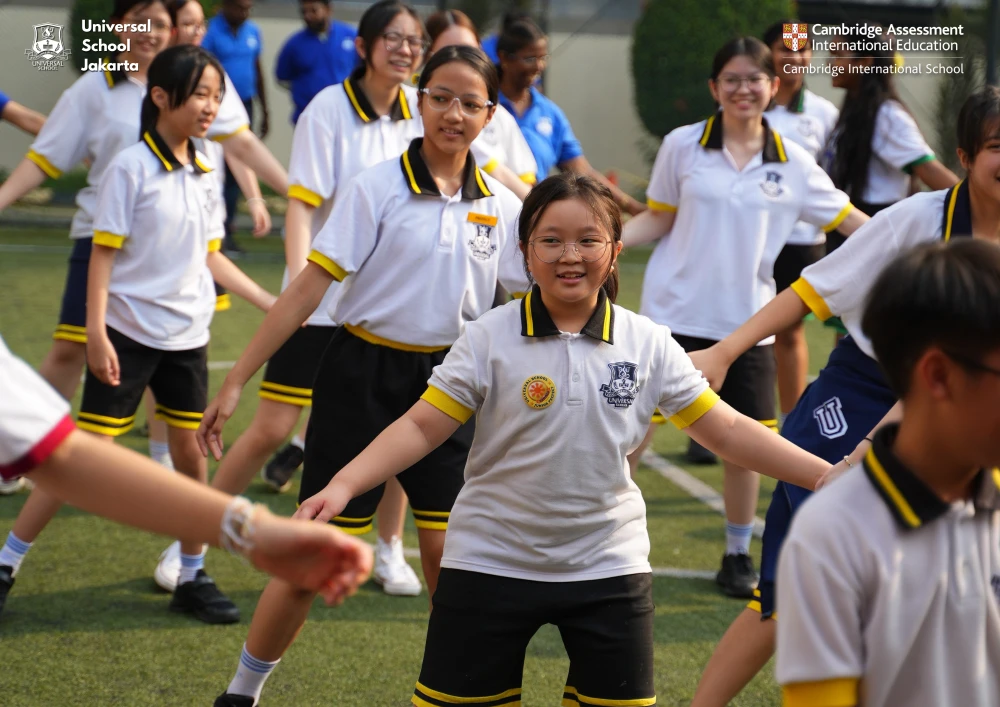
When children learn in an inclusive environment, they become accustomed to interacting with peers from diverse backgrounds, abilities, and personalities. Through these everyday interactions, children learn to understand others, collaborate, and develop empathy. They are not only learning academic subjects in the classroom, but also learning about life.
At Universal School Jakarta, we believe that an inclusive environment has a significant impact on children’s emotional development. Children who feel accepted tend to be more confident and willing to express themselves. They feel safe to ask questions, try new things, and even make mistakes without fear of being judged. This sense of safety becomes an essential foundation for the growth of confidence and independence.
Inclusivity also helps children view differences as a natural part of life and understand that everyone has their own strengths and challenges. Attitudes of mutual respect, care, and fairness develop naturally when children grow and learn together in diversity.
From a learning perspective, children who feel accepted are usually more engaged and motivated. They feel involved in the learning process rather than being passive participants. This has a positive impact on their attitude toward school and learning as a whole.
We understand that inclusivity does not only benefit certain children, but the entire learning community. Through inclusivity, children grow with the understanding that every individual is valuable and has their own place.